After developing the various mechanics mentioned below, I stepped up to a Project Management role within the team while continuing my development work. This role was an auxiliary position that facilitated team meetings, developed proper project rituals and planned out work for the team.
Once I had spent a few months in that role, I became the Project Lead for Fruit Ninja VR 2. My duties as lead encompassed the work I was doing in my previous role, as well as more workload around team management, project vision holding and roadmap planning.
Tutorial System
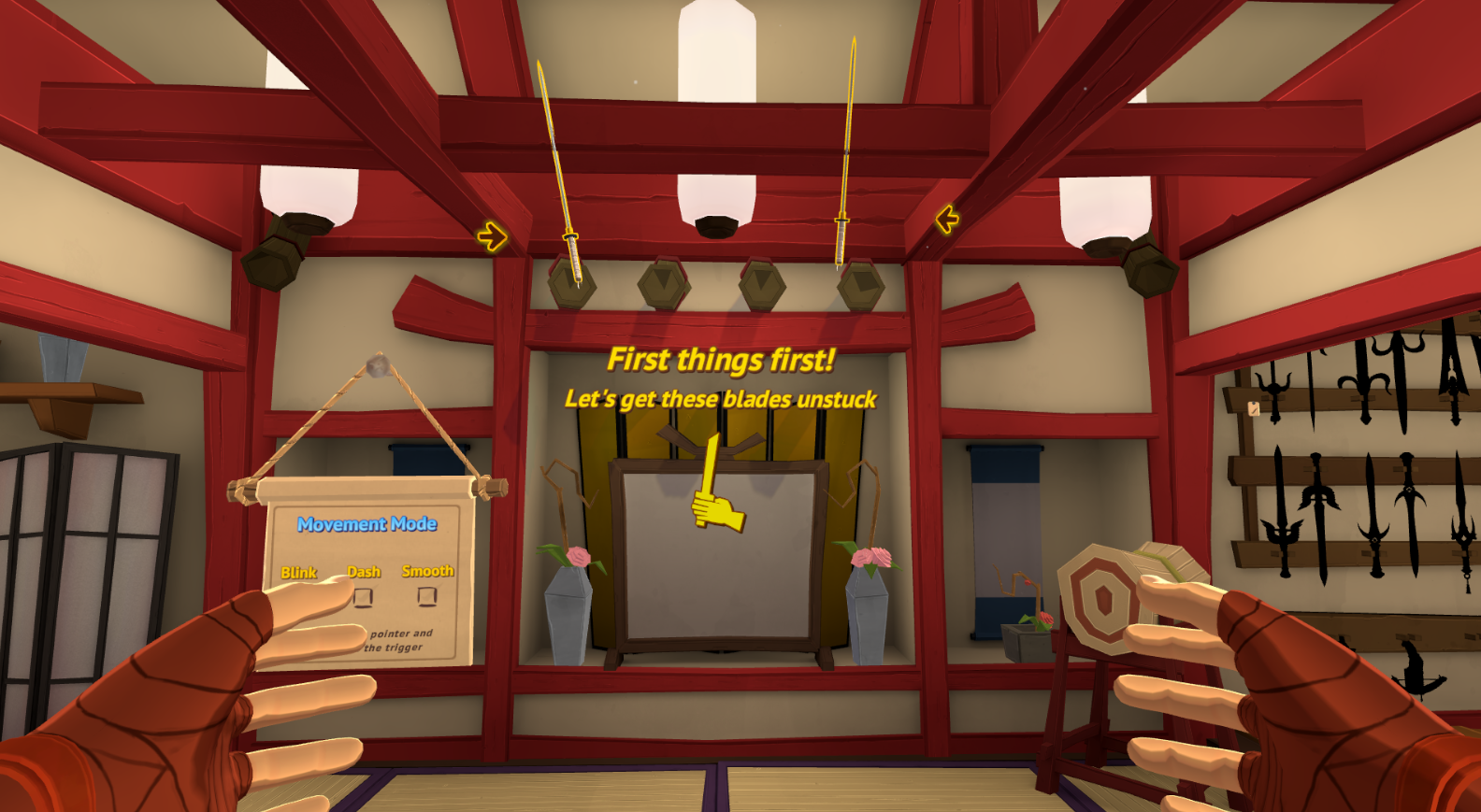
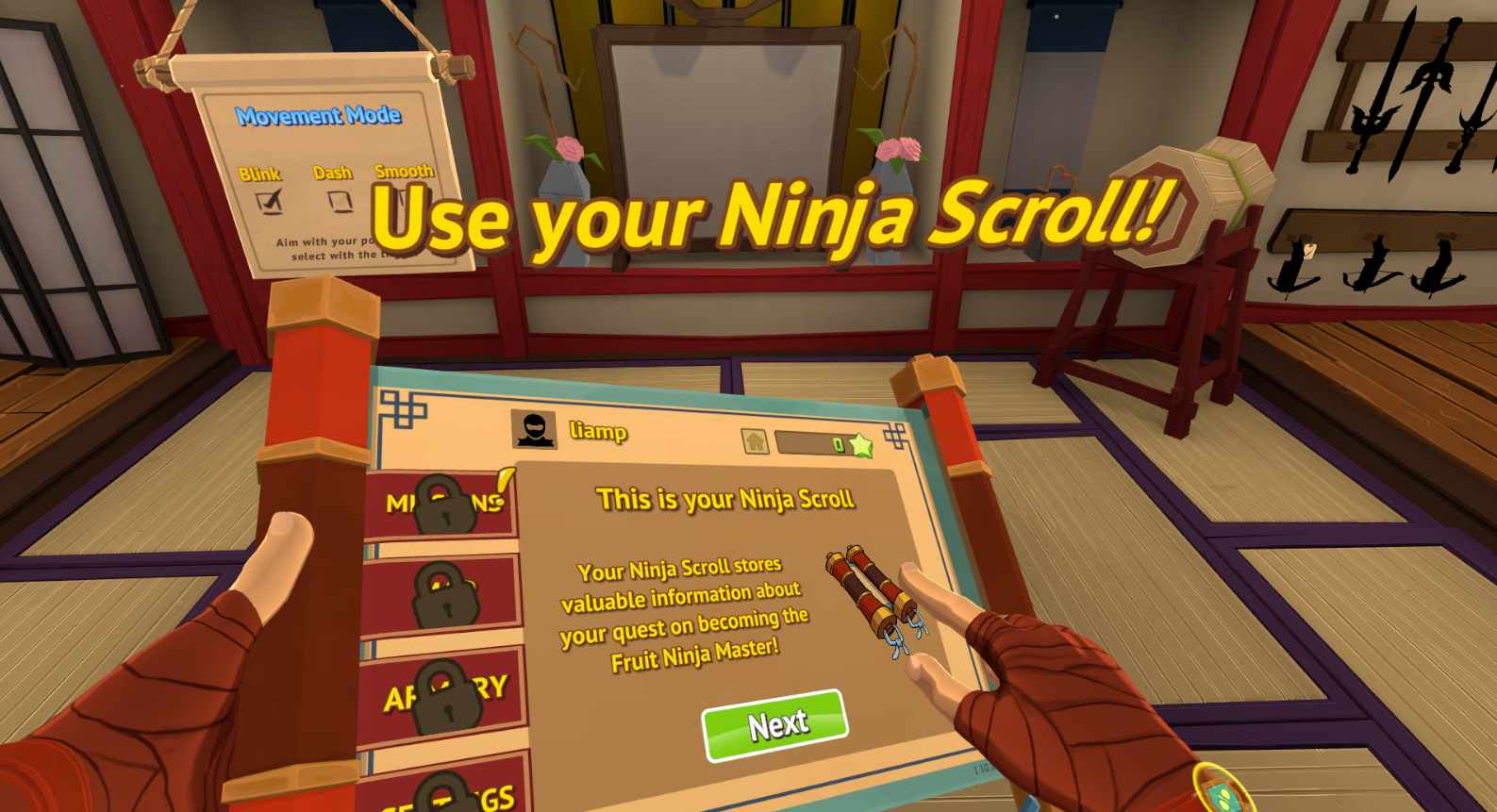
I was responsible for creating the system that allowed our designers to implement and iterate on a tutorial for new players. This system was extremely robust, allowing designers to show messages, prompt/remind the player, display custom UI messages and wait for specific player input. The system also allowed for player choice within it, with two initial weapon paths the player could choose from (blade and bow.
The first call to action within the tutorial.
Guiding the player through custom tutorial UI.
Mission System
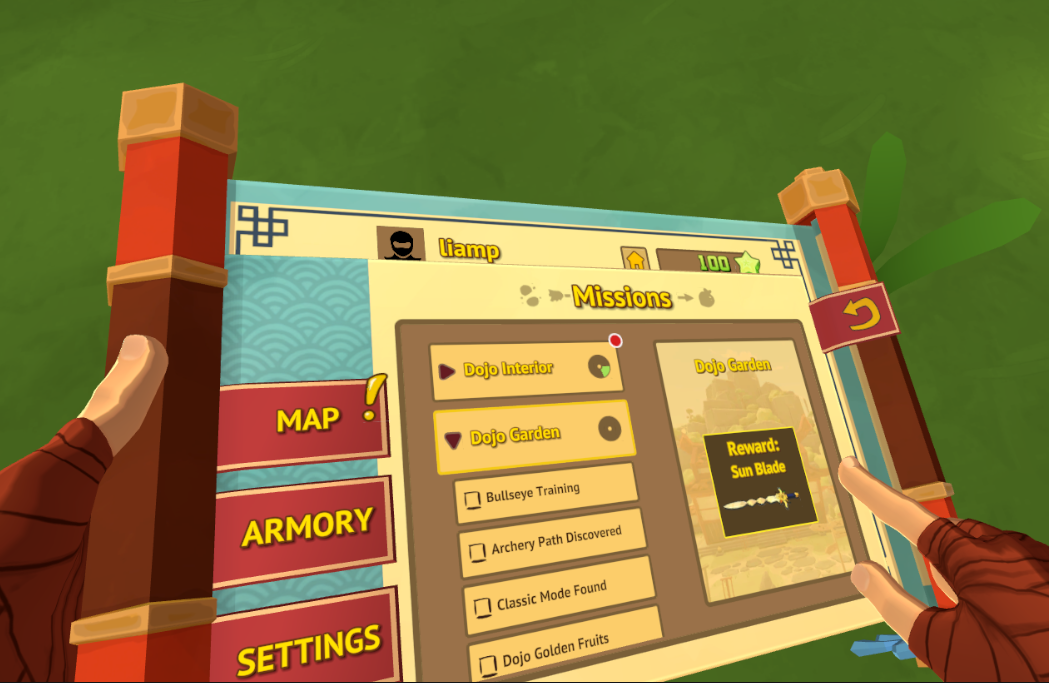
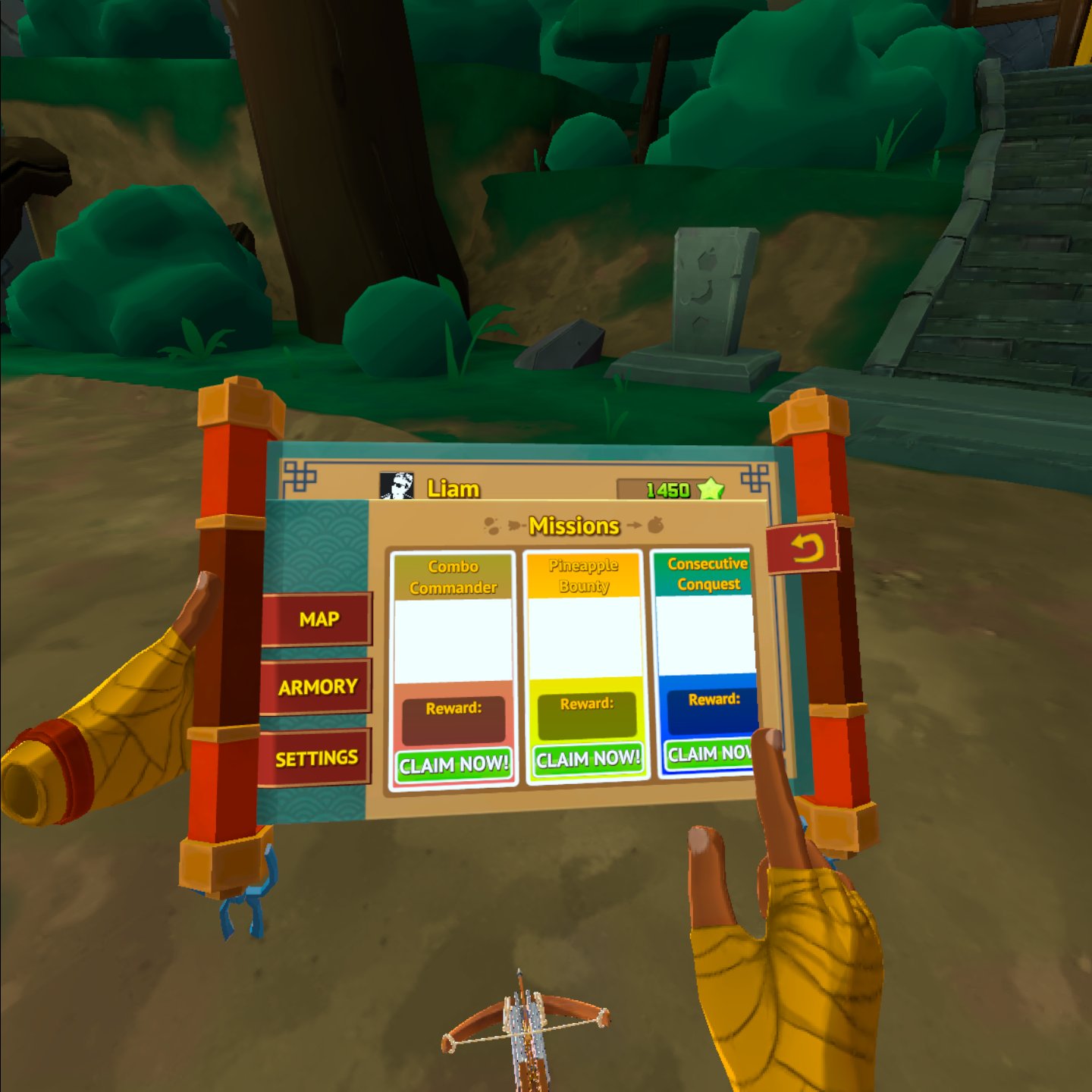
As the player explores the world of FNVR2, they are given various missions to complete for a variety of rewards. I was the main developer of this system which required robust completion conditions. This system also tied into achievement requirements on Steam and Meta Quest.
A list of missions for the player to complete.
Rhythm Mode
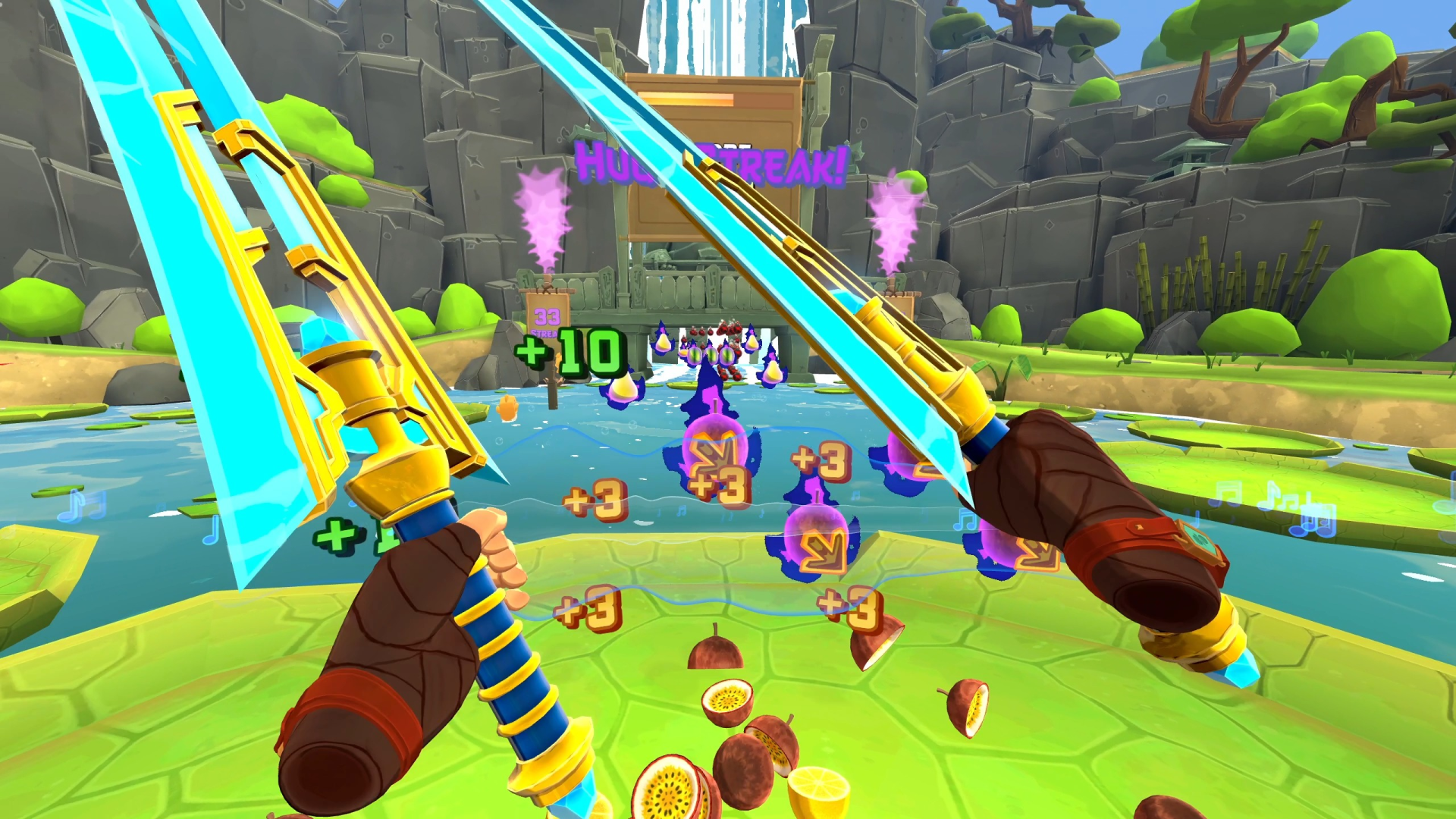
One of the new game modes offered in Fruit Ninja VR 2 was the "Fruitar Hero" rhythm game mode. I was responsible for the 'combo' mechanic and all the scoring, effects and celebration that tied into it. This combo mechanic was a core driving factor for players to repeat each level to achieve better scores.
A player achieving a huge combo streak in Fruitar Hero.
Immersive UI
A major challenge for maintaining immersion in VR is how the UI is presented to the player. In Fruit Ninja VR 2, we developed the concept of a "Ninja Scroll" that the player could pull out and interact with. This scroll contained all the menus and UI needed for players to update their customization, change settings and view their current missions.
I was responsible for implementing the UI and physical interactions for the scroll, as well as constantly iterating on performance improvements.
A WIP screen on the Ninja Scroll
Smooth Locomotion
When Fruit Ninja VR 2 first released, it had only two movement modes. These were 'Slide' and 'Blink' and are very common movement mechanics for VR titles. However, it was still missing the third movement that is a staple for VR, continuous movement (smooth locomotion.)
Smooth locomotion enables a player to move around in VR as if they were controlling a regular first person character and is quite different to the first two modes. It required a brand new NavMesh layer covering the whole game world to enable the ability to define actual walkable areas. This system also needed to give players the ability to teleport short distances to hop across various rivers and games within the areas.
Many iterations on the system was needed to alleviate nausea in players as much as possible. Something as small as initial acceleration rate or stopping speed have massive impacts when it is moving your actual view within the game.
Shop System
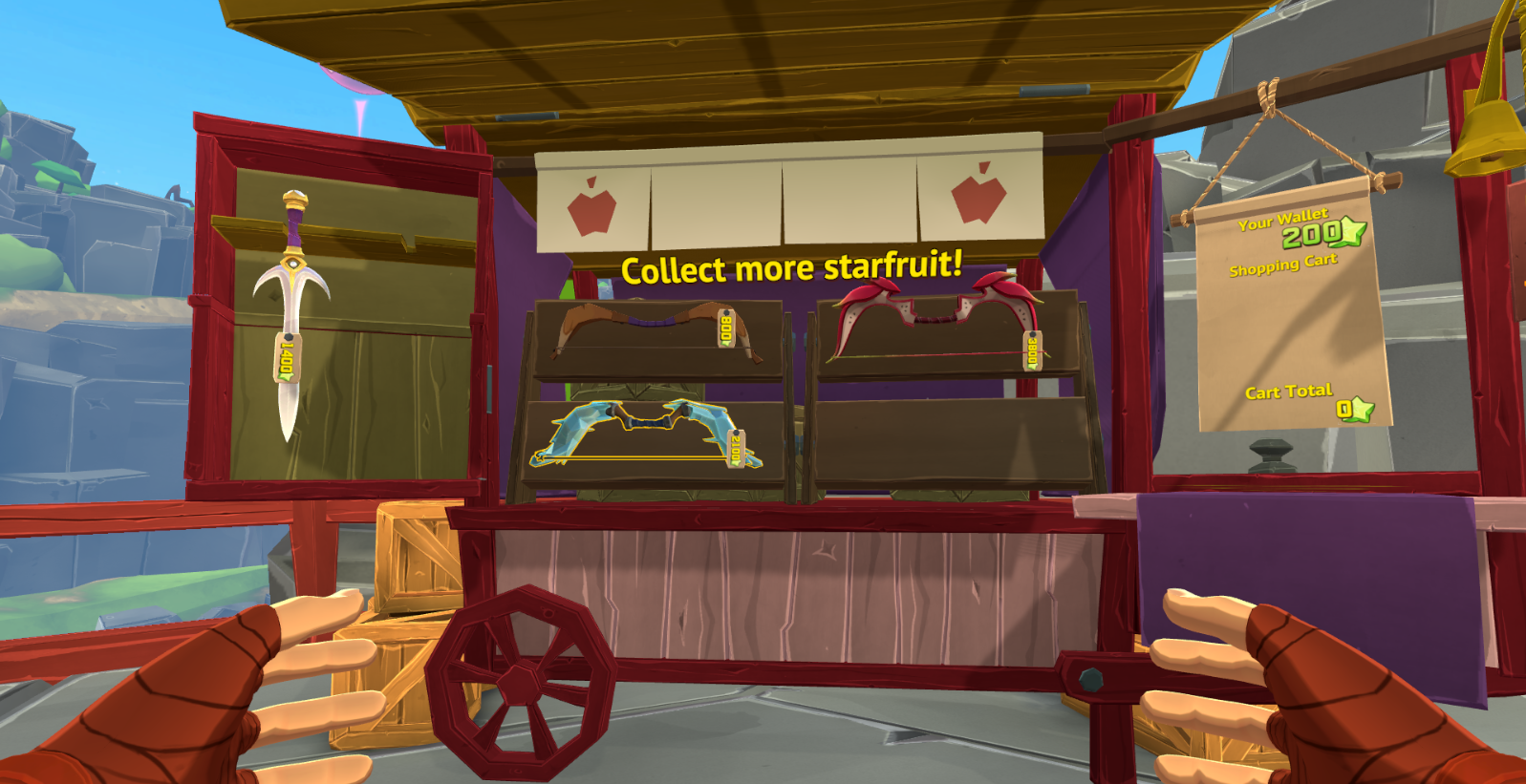
I was responsible for implementing various shop carts around the game world from which players could purchase weapon skins with currency earned through gameplay. These carts used fully physical interactions that allowed players to hold and use the weapons before buying them.
The act of purchasing a weapon was also fully physics based, requiring players to drop their wanted item on the counter and pulling a rope to confirm the purchase.
A shop cart where players could purchase weapons
Gameplay Level Systems
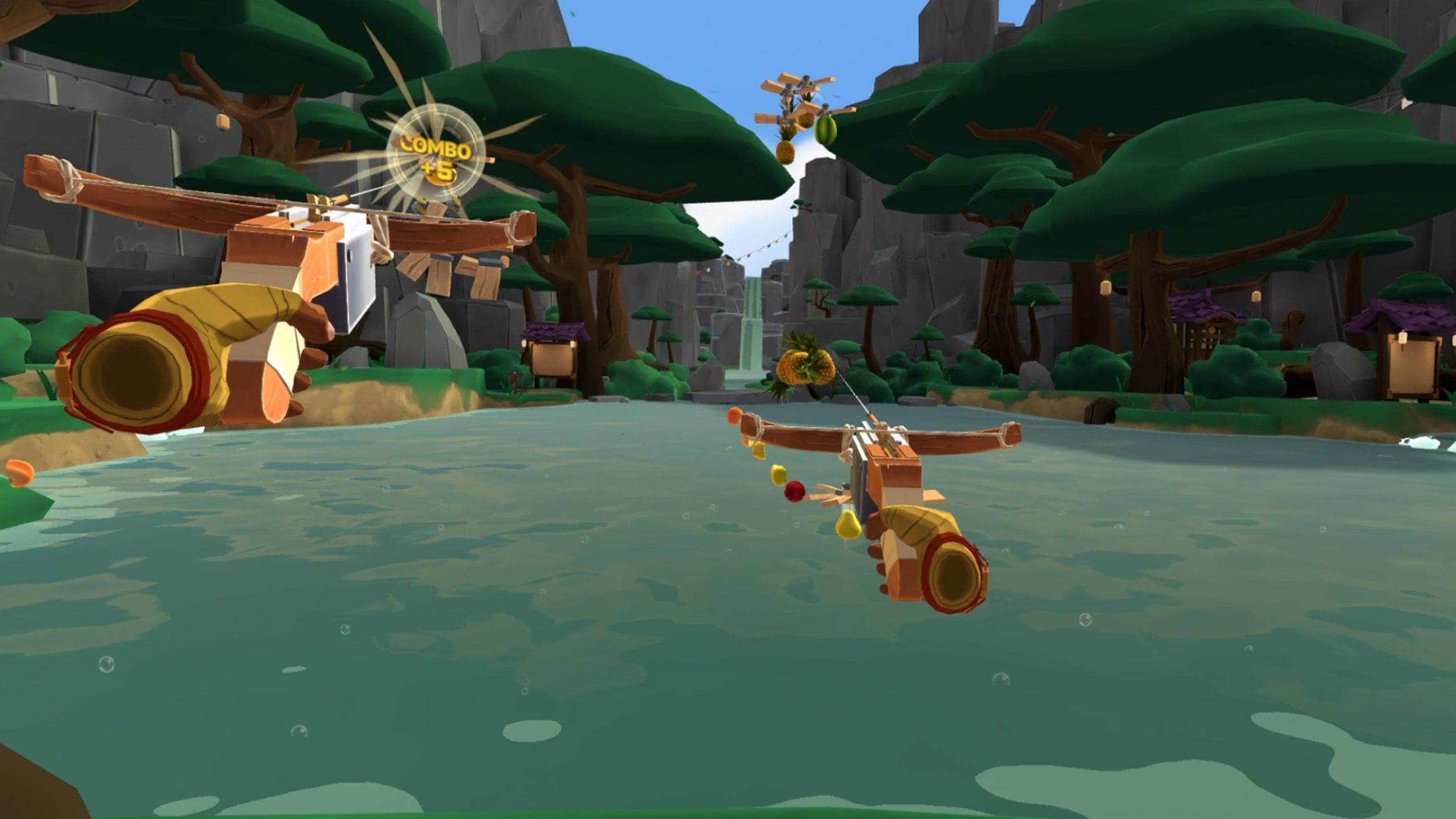
After taking over as project lead, the biggest update we developed involved a new weapon type: hand crossbows. To go with these new weapons, the game required adjustments to some existing gameplay level systems in order to create interesting mechanics for new game modes. I was responsible for adding, adjusting and iterating on these improvements alongside a designer.
A player in the middle of one of the crossbow game modes
Physics Improvements
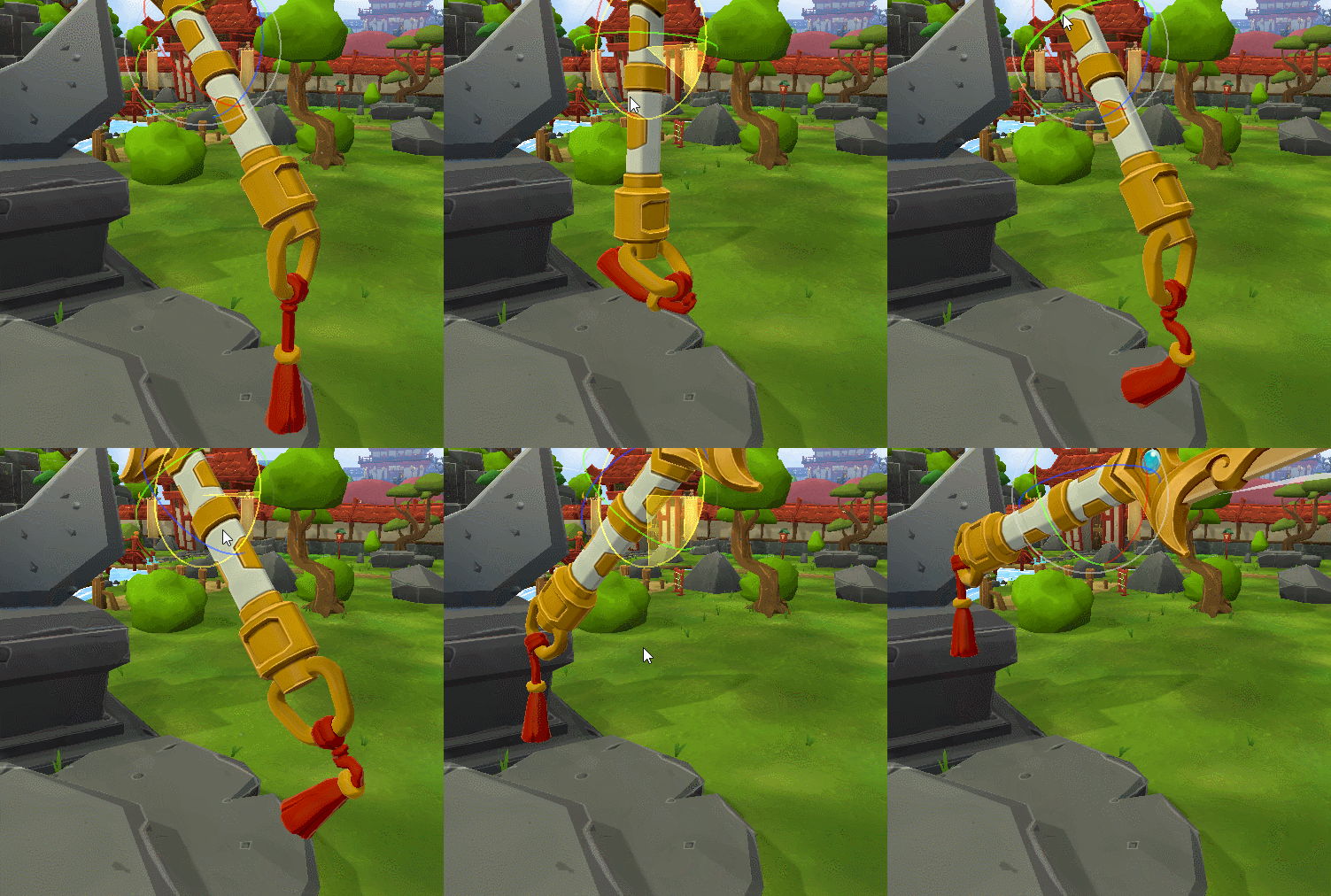
Over the course of developing Fruit Ninja VR 2, I was in charge of various improvements to the physics within the game. These improvements ranged from the slicability of the fruit in the game, to allowing players to bat bombs away like a baseball. Some of these improvements were also used to improve the fidelity of the games most prestigious unlockables to make them more appealing.
Custom physics on one of the game's last unlockables